“The quality of your life depends less on what happens to you and more on how aware you are while it is happening.”
Have you ever driven home without remembering the journey? Or finished an entire meal while scrolling through your phone?
Or reached the end of a page in a book only to realize you don’t remember a single sentence?
If yes, you have experienced the opposite of mindfulness.
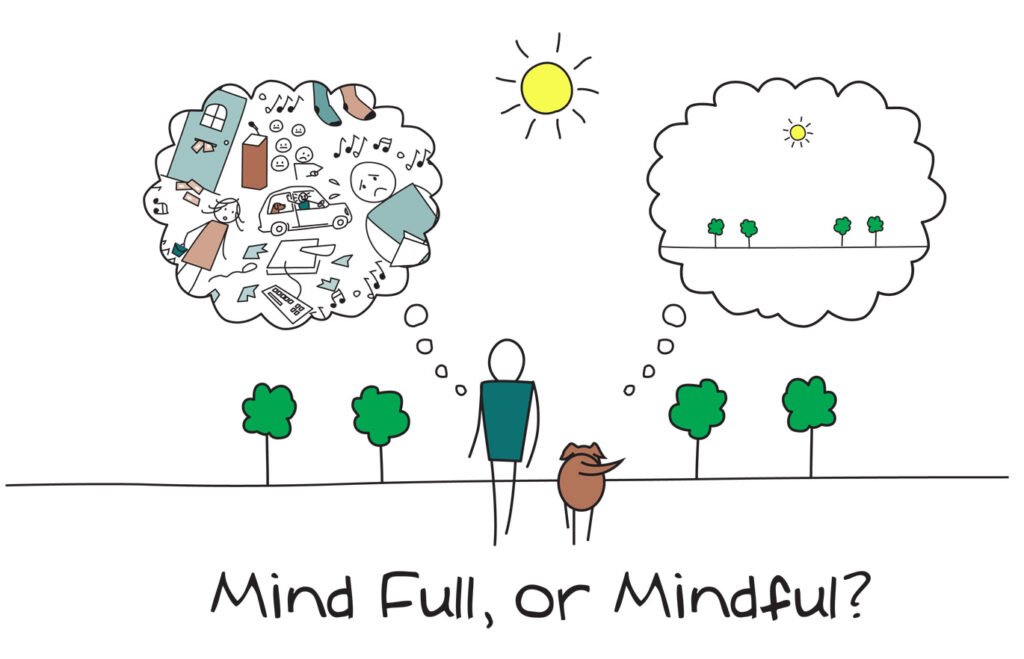
Most of us spend our lives on autopilot. Our bodies are present, but our minds are somewhere else—thinking about yesterday, worrying about tomorrow, or reacting automatically to whatever happens around us.
Mindfulness is the practice of returning to the present moment.
It teaches us to experience life as it is rather than constantly living inside our thoughts.
What Does Mindfulness Mean?
The word mindfulness comes from the ancient Pali word “Sati,” which means awareness, attention, and remembering to be present.
Today, mindfulness is widely studied in psychology, neuroscience, education, and healthcare because of its positive effects on mental and physical well-being.
One of the most widely accepted modern definitions comes from Dr. Jon Kabat-Zinn, the founder of the Mindfulness-Based Stress Reduction (MBSR) program.
“Mindfulness means paying attention in a particular way: on purpose, in the present moment, and non-judgmentally.” — Jon Kabat-Zinn
This definition highlights three important elements:
Paying attention intentionally.
Being fully present.
Observing without judging yourself.
How to Practice Mindfulness in Daily Life
Mindfulness isn’t limited to sitting quietly with closed eyes.
It can become part of everyday living.
While Brushing Your Teeth
Notice:
the taste of the toothpaste
the movement of your hand
the sound of brushing
Stay completely present.
While Eating
Instead of watching television or using your phone:
Observe:
smell
texture
flavour
chewing
gratitude
Mindful eating often leads to slower, more enjoyable meals.
While Walking
Feel:
each step
your breathing
the wind
sounds around you
Walking itself becomes meditation.
During Conversations
Instead of planning your reply…
Simply listen.
Notice the speaker’s words, tone, and emotions.
Presence builds stronger relationships.
Final Thoughts
Mindfulness is not about becoming a different person.
It is about becoming more present with the person you already are.
It is the practice of noticing rather than reacting.
Listening rather than assuming.
Living rather than merely existing.
When practiced consistently, mindfulness transforms ordinary moments into opportunities for greater awareness, wisdom, and compassion.
The present moment is the only place where life truly happens. Learning to return to it, again and again, may be one of the most valuable skills we can develop.